



Imagine a world where devices whisper insights, data dances with understanding, and machines predict your needs before they arise. This isn’t science fiction; it’s the dawn of digital transformation services, where the magic of artificial intelligence meets the boundless potential of the Internet of Things.
Forget data overload and blind automation. We’re entering a realm where devices analyze their actions, learn from experience, and anticipate your every move. Think self-healing factories, proactive healthcare, and cities that adapt to your needs in real time. This is the promise of cognitive computing IoT platform, and it’s here to revolutionize everything from the factory floor to your living room.
But how does it work? In this blog, we’ll peel back the layers of this transformative technology, exploring its key features and the mind-blowing potential it unlocks.
What is Cognitive IoT Computing?
Cognitive computing refers to developing computer systems that can simulate human thought processes, enabling them to learn, reason, and solve problems. Unlike traditional computing, which relies on explicit programming, cognitive computing systems leverage artificial intelligence (AI) and machine learning algorithms to understand and interpret complex data. Cognitive IoT platforms can adapt and evolve based on their interactions and experiences, enabling them to improve performance over time. These cognitive iot applications can understand and respond to human language, making interactions more intuitive and user-friendly. Cognitive IoT computing relies on machine learning algorithms to analyze patterns, make predictions, and continuously refine their understanding of data. Cognitive IoT applications can comprehend and interpret the context in which information is presented, enhancing their ability to provide relevant responses. By mimicking human-like problem-solving approaches, cognitive IoT computing platforms excel at handling complex, unstructured data and deriving meaningful insights.
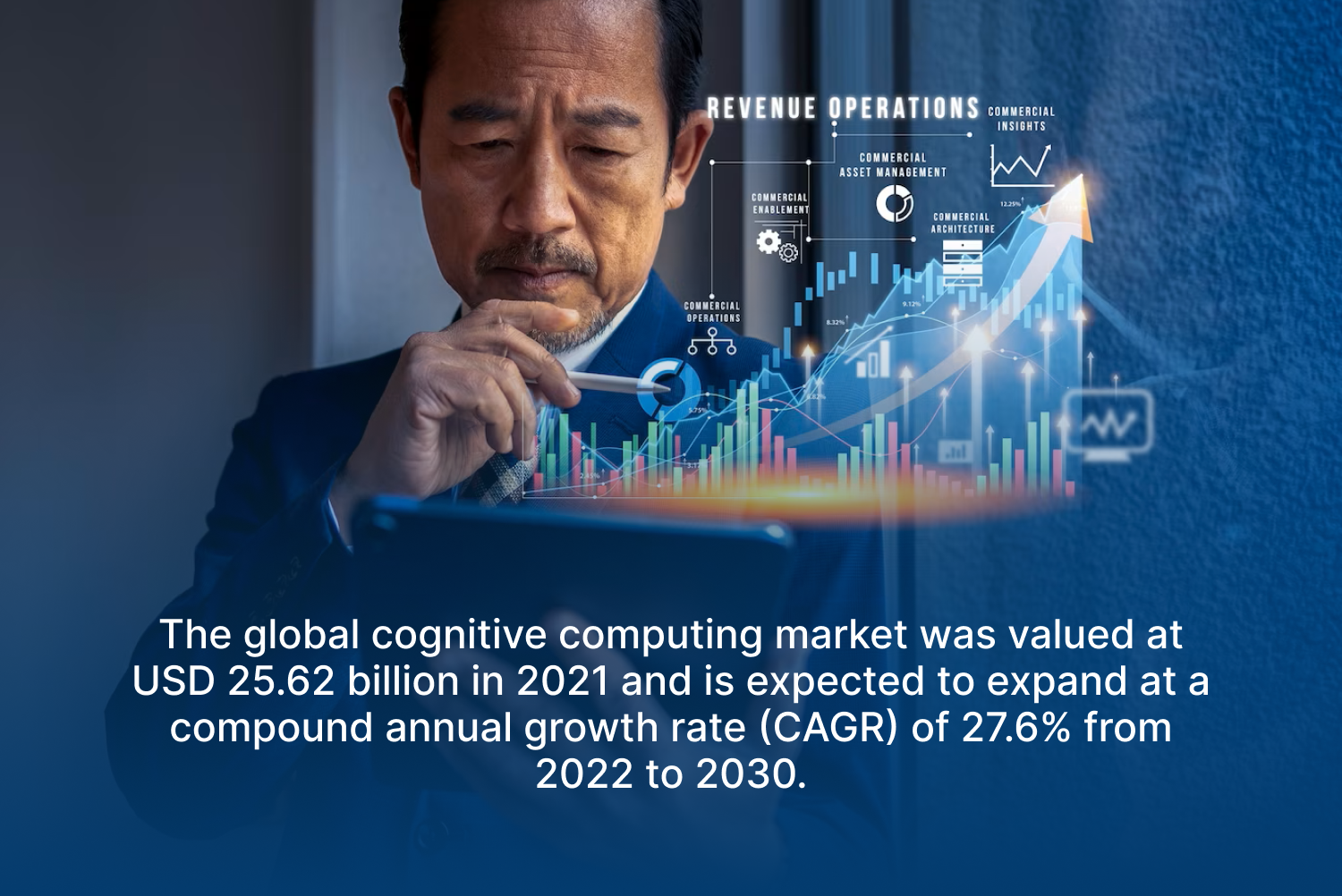
Cognitive Computing Stats & Figures
How Cognitive Computing IoT Platform Works?
Cognitive computing in the context of an IoT platform involves integrating advanced technologies to enable intelligent decision-making, problem-solving, and data processing within the IoT ecosystem. This fusion of cognitive computing and IoT creates a powerful synergy, enhancing the capabilities of both systems for more efficient and intelligent operations.
Cognitive computing IoT platforms combine the power of cognitive technologies with the vast connectivity of the Internet of Things. Here is how it works:
IoT Devices and Sensors
The foundation of any IoT platform is the network of interconnected devices and sensors that collect data from the physical world. These devices generate a continuous stream of data that becomes the input for cognitive computing algorithms.
Data Ingestion and Processing
It involves ingesting massive amounts of data from IoT devices and sensors. Efficient data processing is crucial for extracting valuable insights. Cognitive computing algorithms analyze this data to identify patterns, anomalies, and trends.
Machine Learning and Artificial Intelligence
The core cognitive computing elements that enable the system to learn, adapt, and make decisions. Machine learning algorithms analyze historical and real-time data to make predictions, optimize processes, and uncover hidden insights. AI capabilities may include natural language processing and image recognition for a more comprehensive understanding.
Context Awareness
Understanding the context in which data is generated, considering factors such as time, location, and user behavior. Enhances decision-making by providing a deeper understanding of the circumstances surrounding the data, improving the relevance and accuracy of insights.
Real-time Analytics
The ability to analyze data as it is generated, providing immediate insights. Real-time analytics enable quick response to changing conditions, making it possible to implement adaptive and proactive measures.
Security and Privacy Measures
Robust security protocols and privacy measures to protect sensitive data. Ensures that cognitive insights are used responsibly, with safeguards against unauthorized access, data breaches, and misuse.
User Interface and Interaction
It is the interface through which users interact with the cognitive computing IoT platform. A user-friendly interface facilitates communication between users and the system, enabling them to understand insights, make informed decisions, and provide feedback for continuous improvement.
Integration with External Systems
Seamless integration with other enterprise solutions, cloud services, or third-party applications. The platform can leverage data and functionalities from various sources, creating a more comprehensive and versatile cognitive environment.
Adaptability and Learning
The ability of the cognitive IoT platforms to adapt and improve over time based on user feedback and changing environmental conditions. Ensures that the plat cognitive IoT platforms form evolves to meet new challenges and continues to provide valuable insights as the IoT ecosystem expands.
A cognitive computing IoT platform integrates IoT data with advanced cognitive capabilities, enabling organizations to derive meaningful insights, optimize processes, and make informed decisions in real time.
Also Read- IoT Consulting Services: Everything You Need to Know
Cognitive Computing IoT Platform Use Cases
Cognitive computing integrated with IoT platforms opens up a realm of use cases that leverage advanced data processing, machine learning, and human-like reasoning to enhance decision-making and automation. Here are some use cases in the intersection of cognitive computing and IoT:
Predictive Maintenance
Cognitive computing can analyze real-time data from IoT sensors to predict when equipment or machinery will likely fail. This enables proactive maintenance, reducing downtime and optimizing the lifespan of assets.
Smart Healthcare
In healthcare, cognitive computing IoT platforms can assist in remote patient monitoring, analyzing data from wearable devices, and providing personalized health insights. It can help in early detection of health issues and recommend appropriate interventions.
Supply Chain Optimization
Cognitive computing combined with IoT facilitates a more intelligent and responsive supply chain. It can optimize inventory management, demand forecasting, and logistics by analyzing data from connected devices throughout the supply chain.
Energy Management
In smart buildings or cities, cognitive computing IoT platform analyzes data from IoT sensors to optimize energy consumption. It can adjust heating, cooling, and lighting systems based on real-time conditions, leading to energy efficiency.
Smart Agriculture
Cognitive computing IoT platform in agriculture can process data from sensors monitoring soil conditions, weather patterns, and crop health. This enables precision farming, allowing farmers to make informed irrigation, fertilization, and pest control decisions.
Autonomous Vehicles
Cognitive IoT applications enhance the capabilities of IoT-enabled autonomous vehicles by processing and interpreting data from various sensors. It aids in real-time decision-making, such as route optimization, hazard detection, and adaptive cruise control.
Environmental Monitoring
IoT devices collecting environmental data, such as air quality sensors or weather stations, can benefit from cognitive IoT platforms. It enables sophisticated analysis and interpretation of ecological patterns, supporting initiatives like pollution control and climate monitoring.
Retail Analytics
In retail, cognitive IoT platforms can analyze IoT-generated data to understand customer behavior, optimize inventory, and personalize marketing strategies. It helps retailers enhance the customer experience and streamline operations.
Smart Cities
Cognitive IoT platforms contribute to the development of smart cities by processing data from diverse sources like traffic sensors, surveillance cameras, and environmental monitors. It aids in traffic management, public safety, and urban planning.
Fraud Detection and Security
In cybersecurity, cognitive IoT platforms analyze patterns and anomalies in data from IoT devices to detect potential security threats. It enhances the ability to identify and respond to security breaches in real time.
The combination of cognitive computing and IoT extends the capabilities of both technologies, providing more intelligent and adaptive solutions across various domains. You can hire a professional IoT development company like matellio to build flawless cognitive IoT platforms and solutions based on your business requirements.
Benefits of Cognitive Computing IoT platforms
Cognitive computing in the context of an Internet of Things (IoT) platform offers a range of benefits, enhancing the capabilities of connected devices and systems. Here are some key advantages:
Advanced Analytics and Decision-Making
Cognitive computing IoT platform analyzes vast amounts of real-time data. Smart decision-making algorithms process complex data sets, providing actionable insights for better decision-making.
Predictive Maintenance
Cognitive IoT platforms can predict potential issues and failures in connected devices or machinery. This enables proactive maintenance, reducing downtime and extending the lifespan of equipment.
Natural Language Processing (NLP) and Interaction
Integrating NLP capabilities allows users to interact with cognitive computing IoT platform using natural language. This enhances user experience and simplifies the control and monitoring of connected devices.
Machine Learning for Adaptability
Cognitive IoT platforms and solutions use machine learning algorithms to adapt and learn from data patterns. This adaptability improves the efficiency of cognitive IoT applications over time, optimizing performance based on evolving conditions.
Enhanced Security Measures
Cognitive IoT platforms can analyze data patterns to detect anomalies and potential security threats. This proactive approach strengthens real-time cybersecurity measures, safeguarding connected devices and data.
Personalization and User Experience
Cognitive computing IoT platform enables personalized experiences based on user preferences and behavior. Tailored recommendations and automated adjustments enhance user satisfaction in various applications, from smart homes to industrial settings.
Efficient Resource Management
IoT platforms integrated with cognitive computing optimize resource usage. Whether energy consumption in a smart building or inventory management in a supply chain, cognitive computing IoT platform enhances resource efficiency.
Real-Time Data Processing
Cognitive computing IoT platform enables quick and meaningful processing of real-time data from IoT devices. This speed is crucial in applications such as autonomous vehicles or smart city systems where instant decision-making is essential.
Cross-Domain Integration
Cognitive IoT platforms facilitate integration across different domains and industries. This interoperability allows for a seamless exchange of information, promoting collaboration and innovation.
Cost Reduction and Efficiency
Predictive analytics and automation offered by cognitive computing IoT platform reduce operational costs. Improved efficiency in various processes, from supply chain management to logistics, contributes to overall cost savings.
Integrating cognitive computing into IoT platforms enhances connected systems’ overall functionality, efficiency, and intelligence. It empowers businesses and individuals to make data-driven decisions, optimize processes, and unlock new possibilities in the rapidly evolving landscape of IoT applications.
Also Read- Revolutionizing Industries: Top Cognitive Computing Use Cases Unveiled
Development steps of Cognitive Computing IoT platform
Developing a Cognitive Computing IoT platform involves integrating advanced cognitive capabilities with IoT infrastructure to enable intelligent decision-making and data processing. Here are key steps to guide the development process:
Define Objectives and Use Cases
Clearly define the objectives of your Cognitive Computing IoT platform. Identify specific use cases where cognitive capabilities can enhance IoT functionality, such as predictive maintenance, anomaly detection, or smart automation.
Data Collection and Integration
Establish a robust data collection strategy for IoT devices. Ensure data is diverse, relevant, and representative of real-world scenarios. Implement data integration mechanisms to aggregate and preprocess data from various IoT sources. This may involve the use of edge computing for initial data processing.
Choose Cognitive Technologies
Select appropriate cognitive technologies based on your use cases, such as machine learning, natural language processing, and computer vision. Avail technology consulting services to help you with integrating pre-trained models or develop custom models depending on your specific requirements.
IoT Platform Development
Build or select an IoT platform that supports data ingestion, device management, and communication protocols. Ensure compatibility with cognitive services and APIs for seamless integration.
Security and Privacy
Implement robust security measures to protect both IoT devices and cognitive computing components. Address privacy concerns by defining and adhering to data governance policies.
Real-time Analytics
Incorporate real-time analytics capabilities to enable immediate insights and actions based on cognitive processing. Leverage technologies like Apache Kafka or MQTT for efficient and scalable data streaming.
User Interface and Experience
Develop user interfaces that provide insights generated by cognitive computing in a user-friendly manner. Consider incorporating dashboards, visualization tools, or voice interfaces for user interaction.
Scalability and Performance
Design the platform to scale horizontally to accommodate growing IoT devices and increasing data volumes. Optimize the performance of cognitive computing algorithms to handle real-time processing demands.
Edge Computing Integration
Explore the integration of edge computing to process data closer to the source, reducing latency and optimizing bandwidth usage. Based on use case requirements, distribute cognitive capabilities between the edge and the cloud.
Integration with External Systems
Integrate the cognitive IoT platform with external systems like enterprise databases, cloud services, or third-party APIs. Ensure interoperability with other IoT ecosystems.
Continuous Testing and Quality Assurance
Conduct thorough testing, including unit, integration, and performance. Implement continuous testing practices to identify and address issues promptly.
Continuous Monitoring and Improvement
Implement monitoring tools to track system performance, detect anomalies, and ensure reliability. Continuously improve cognitive models through iterative development cycles, incorporating feedback and new data.
Compliance and Standards
Ensure compliance with relevant IoT and cognitive computing standards. Stay updated on industry regulations and adjust your platform accordingly.
Following these steps, you can develop a robust Cognitive Computing IoT platform that leverages the synergy between IoT and cognitive technologies for intelligent decision-making and enhanced user experiences.

Conclusion
The journey into the world of cognitive computing IoT has just begun. As this technology continues to evolve, the possibilities are truly endless. Imagine smart cities that adapt to your needs, healthcare systems that anticipate illness before it strikes, and factories that self-diagnose and optimize production on the fly. Integrating cognitive computing into your IoT platform is no longer optional, it’s essential. But in a crowded field, choosing the right partner can make all the difference.
Matellio stands out. We’re not just tech experts; we’re architects of the next generation. We’re a leading software development company known for crafting cutting-edge IoT solutions, and our passion for customization ensures your platform unlocks its full potential. And while cutting-edge comes at a price, with Matellio, it doesn’t have to break the bank. We tailor our integration services to your specific needs, delivering maximum impact without unnecessary bloat.
Don’t settle for less. Choose Matellio and unlock the true power of your IoT platform, powered by the next-gen brain of cognitive computing. The future of data starts now.
FAQs
[sp_easyaccordion id=”44835″]