



Unlocking the true potential of the Internet of Things (IoT) requires a robust foundation that seamlessly connects devices, manages data, and empowers businesses to harness the immense power of interconnected technologies. Enter the realm of IoT middleware platform development, an essential cornerstone in evolving IoT ecosystems.
It has emerged as the beacon of change, transcending limitations and reshaping the very fabric of business operations. These innovative platforms have bridged gaps and transformed how enterprises function, enabling seamless connectivity, overcoming erstwhile obstacles, and fostering a new era of efficiency and agility.
Here, through this blog, we have explored different aspects of this middleware platform and how it can play a significant role in your business growth. So, let’s get started!
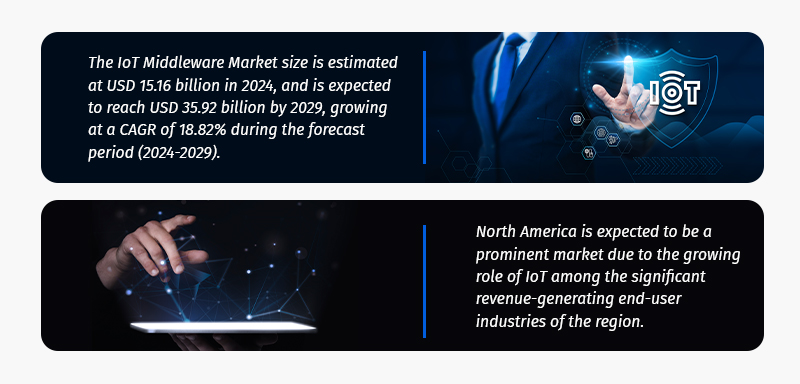
Market Stats of IoT Middleware Platform Development
Why Should Businesses Invest in IoT Middleware Platform Development?
The market stats mentioned above are enough to give you an idea about the rise in demand for developing these platforms. In this competitive era, developing these platforms is as important as leveraging the right digital transformation services to make your business grow in the long run. Here, we have come up with some major perks that you can gain after you invest in developing an IoT-driven middleware platform.
 Improved Operational Efficiency
It is one of the key advantages that your business can gain after investing in developing platform middleware for IoT solutions. It is a platform that promises a streamlined, interconnected system where devices communicate seamlessly, processes are optimized, and data flows effortlessly. By investing in such a platform, your business can orchestrate a cohesive network of devices and systems, enabling smoother operations.
 Enhanced Data Management
With custom enterprise software development focusing on IoT middleware, your business gains a robust system to gather, process, and leverage the vast amounts of data generated by connected devices. It’s akin to having a smart assistant that not only collects data but also knows how to handle it effectively. It also offers you a tailor-made solution designed to manage your unique data landscape efficiently. It’s about harnessing the power of data, turning it into a strategic asset, and gaining a competitive edge in your industry.
 Scalability and Flexibility
Scalability and flexibility are the superpowers your business gains through developing IoT middleware platforms. It is a platform that is not bound by any limitations, it’s a foundation that expands effortlessly. When your business evolves, adding new devices or exploring new markets, this platform is ready to scale up without missing a beat.
Whether you’re a small startup with ambitious growth plans or an established enterprise venturing into new territories, this platform scales and adapts to suit your specific needs. Scalability and flexibility empower your business to respond to market demands swiftly. It’s about future-proofing your infrastructure, ensuring it’s equipped to handle tomorrow’s challenges.
 Seamless Integration and Interoperability
An IoT middleware platform acts as a unifying force in your business ecosystem. It’s similar to a language interpreter that ensures all your devices, systems, and applications can communicate effortlessly, regardless of their native languages. It is integration that eliminates silos within your infrastructure, allowing devices and software from different vendors to work harmoniously.
Furthermore, interoperability is like having a shared language among diverse systems, enabling them to work together cohesively. It means your manufacturing machinery, inventory management system, and customer databases can exchange information seamlessly. It’s akin to having a common platform where everyone speaks the same ‘data’ language.
 Enhanced Security and Compliance
Security and compliance form the bedrock of a robust and trustworthy business infrastructure. Developing a platform like this serves as a fortress, fortifying your systems against vulnerabilities and ensuring adherence to industry regulations and standards.
Enhanced security through this platform is like having a vigilant guard continuously monitoring your digital premises. It implements robust encryption, authentication protocols, and access controls to safeguard your data against potential threats. It’s like having a multi-layered security system that keeps your sensitive information safe from unauthorized access.
 Faster Time to Market
Time is of the essence in today’s competitive market, and an IoT driven middleware platform acts as a catalyst, expediting your journey from ideas to market-ready solutions. It’s like having a shortcut that leads you swiftly from concept to a polished, market-ready product or service.
The agility provided by this platform accelerates the development and deployment of IoT solutions. It’s like having a well-oiled assembly line where every component seamlessly fits into place.
Custom-built IoT Middleware Platforms offer a tailored infrastructure perfectly aligned with your business needs. This tailored approach eliminates the need to start from scratch with each new project. Instead, it’s like having a ready-to-use toolkit, empowering your team to build upon existing functionalities, significantly reducing development time.
Also Read- IoT Consulting Services: Everything You Need to Know
What are the Types of IoT Middleware Platform?
After scrolling through the advantages that IoT middleware platforms can offer your business, it’s time to learn about their other aspects. These platforms come in various types, each catering to specific functionalities and requirements within the IoT ecosystem. Let’s discuss the major ones with you.
Device Management Platforms
- Features: These platforms handle device onboarding, provisioning, configuration, monitoring, and remote management. They ensure device health, security, and firmware updates.
- Business Benefits: Simplify device management, enhance device security, reduce downtime, and optimize device performance, leading to improved operational efficiency.
Connectivity and Communication Platforms
- Features: Support various communication protocols, act as a bridge between IoT devices and backend systems, ensure seamless data transmission, and handle protocol translation.
- Business Benefits: Enable interoperability, facilitate smooth communication between devices and systems, and ensure data consistency across the IoT ecosystem.
Integration and Application Enablement Platforms (AEP)
- Features: Offer APIs, SDKs, and tools for application development, data integration, and device connectivity. Provide a platform for developing and deploying IoT applications.
- Business Benefits: Streamline application development, enable rapid prototyping, facilitate device connectivity, and support integration with existing systems for quicker time-to-market.
Data Management and Analytics Platforms
- Features: Aggregate, store, process, and analyze IoT-generated data. Offer tools for data visualization, analytics, and deriving actionable insights.
- Business Benefits: Enable data-driven decision-making, predictive analytics, and optimization of operations based on insights derived from IoT data.
Security and Identity Management Platforms
- Features: Implement robust security measures like encryption, authentication, access control, and identity management to protect IoT devices and data.
- Business Benefits: Ensure data privacy, prevent unauthorized access, mitigate security risks, and maintain compliance with industry regulations.
Edge Computing Platforms
- Features: Process and analyze IoT data closer to the source (at the edge) to reduce latency, optimize bandwidth usage, and perform real-time analytics.
- Business Benefits: Investing in IoT middleware platform development can improve response times, reduce data transmission costs, and enable quicker decision-making by processing data closer to where it’s generated.
Cloud-based IoT Platforms
- Features: Provide scalable cloud infrastructure for storing, processing, and managing IoT data. Offer scalability, flexibility, and accessibility for managing large volumes of IoT data.
- Business Benefits: Enable cost-effective scalability, support global accessibility, and provide reliable cloud-based services for managing and analyzing IoT data.
Also Read- How to Seek Custom IoT Cloud Platform for Business Excellence: A Guide
Industry-Specific Platforms
- Features: Tailored for specific industries (e.g., healthcare, manufacturing, agriculture) to address industry-specific requirements, regulations, and use cases.
- Business Benefits: Provide specialized solutions catering to unique industry needs, optimizing operations, and facilitating industry specific IoT applications and innovations.
Open-Source IoT Middleware
- Features: Community-driven platforms that offer flexibility, customization, and cost-effectiveness through open-source development, allowing modifications and enhancements.
- Business Benefits: Enable customization, reduce development costs, and encourage collaboration among developers for continuous improvements and innovation.

IoT Middleware Platforms: Use Cases
Moving forward, it is significant to learn about the use cases of these platforms so you can decide how to use them for your business growth. Investing in IoT middleware platform development can be fruitful for businesses catering to different sectors and here we have come up with some of the major industries.
Manufacturing
Developing an IoT middleware platform to integrate machines, sensors, and production systems. It enables live monitoring of equipment, predictive maintenance, and optimization of production processes. It can streamline operations, reduce downtime, and enhance overall efficiency on the factory floor.
Healthcare
You can deploy IoT middleware for managing medical devices, patient data, and healthcare systems. It facilitates remote patient monitoring, ensures secure data exchange among healthcare systems, and aids in timely decision-making by healthcare providers. It can improve patient care, optimize resource utilization, and enhance patient outcomes.
Smart Cities
When you leverage IoT development company services to develop middleware, it can enhance your business catering in smart cities. It can be used to integrate diverse systems like traffic management, waste management, and energy grids. This enables centralized monitoring, data analysis, and decision-making for city authorities. It helps in optimizing city services, reducing resource wastage, and enhancing citizen satisfaction.
Agriculture
Using custom-built IoT middleware to connect sensors, drones, and automated systems for monitoring soil conditions, crop health, and irrigation. It facilitates data-driven farming practices, precision agriculture, and optimized resource usage. It can lead to improved crop yield and resource efficiency.
Retail and Supply Chain
You can implement IoT middleware for inventory management, tracking assets, and supply chain optimization. It enables real-time tracking of goods, enhances inventory control, and streamlines logistics. It can result in improved inventory accuracy, reduced stockouts, and optimized supply chain operations.
Energy Management
Investing in IoT middleware platform development can help you to monitor energy consumption, manage smart grids, and optimize energy distribution. It will facilitate better resource utilization, load balancing, and grid stability. It can lead to reduced energy wastage and improved sustainability.
Transportation and Logistics
You can utilize custom-built IoT middleware for fleet management, route optimization, and real-time tracking of goods. It enables efficient logistics operations, timely delivery, and reduced transit times. It can result in cost savings, improved customer satisfaction, and streamlined logistics.
Steps for IoT Middleware Platform Development
Let us begin with one of the most significant sections of this blog. Here, we have mentioned some of the crucial steps that can help in making the IoT middleware platform development journey seamless.
Research and Define Your Requirement
Before diving into development, the initial step is understanding and articulating your business needs. This involves conducting comprehensive research to identify specific challenges, opportunities, and goals that an IoT Middleware Platform could address. Engage stakeholders, gather insights from end-users, and outline clear objectives for the platform. Define scalability needs, data handling requirements, security protocols, and compatibility with existing systems. A well-defined roadmap will serve as a guide throughout the development process.
Researching is a time taking process that requires expert guidance, so we suggest you leverage IoT consulting services from a reputable company like Matellio. The experts will help you with the research work and let you define a well-planned objective for your project.
Choose the Development Team
Selecting the right development team is pivotal for the success of your IoT Middleware Platform development. You must look for a team that holds experience in IoT solutions and middleware development and is adept in relevant technologies. If you are considering developing an in-house team, it can elongate your development timeline and make your development cost heavy. So, choose a company like Matellio where you get ensured seamless communication, swift issue resolution, and adherence to project timelines.
Choose the Right Tech Stack
Now, it’s time to choose the appropriate technology stack. Your development team must evaluate different IoT frameworks, databases, communication protocols, and security measures based on your specific project requirements. The experts must ensure that the selected tech stack aligns with your business needs and offers flexibility for future enhancements or integrations. Here, we have mentioned a general tech stack for your idea. You may alter it as per your need.
[table id=112 /]
Develop, Test, and Deploy
The development phase is initiated based on the defined requirements and chosen technology stack. Follow agile methodologies to incrementally build and refine the platform. Prioritize functionalities aligned with the defined objectives.
Make sure that the development company you choose is offering you thorough testing services for your IoT middleware platform development. At Martello, we perform various tests, including functionality, security, performance, and scalability tests. Our experts also address identified issues promptly to ensure a stable and secure platform. Upon successful testing, proceed with deployment to your production environment.
Also Read- IoT Product Development: Use Cases and Development Process

How Can Matellio Help You with IoT Middleware Platform Development?
All the different sections of this blog are designed to give you a clear picture of how well your business can grow when you invest in IoT middleware platform development. The benefits, use cases, and development process all indicate that using this platform can be fruitful for your business in the long run. But you need the right development partner in order to develop the platform that aligns with your business perfectly.
And Matellio can become that trusted partner for you!
We have experience in offering guidance in similar projects to our clients’ catering to different industries. Our experts do not just offer technology consulting services but also make sure that all the challenges that are faced during the development process are tackled in the best way.
From conceptualization to deployment and beyond, Matellio provides comprehensive support at every stage of the development lifecycle.
Security holds utmost importance for us; hence, we enforce strong security protocols and adhere to industry standards to safeguard your data and operational integrity.
If you are confused about our services and wish to learn about development cost, development time estimation, or any other information relevant to your project, please fill out this form.
FAQs
[sp_easyaccordion id=”43565″]