




Traditional debt collection processes are notorious for being time-consuming, prone to errors, and resource intensive. Businesses relying on manual efforts often face challenges such as inconsistent follow-ups, delayed payments, and costly overheads. These inefficiencies, combined with the pressure to maintain compliance with regulatory standards, make debt collection a daunting task for many organizations.
Enter automated debt collection, a cutting-edge solution for modern businesses. By embracing automation, companies can streamline their debt recovery processes, minimize human error, and significantly improve payment recovery rates. In today’s fast-paced environment, the need for faster, more accurate, and compliant debt recovery practices has never been greater.
What is Automated Debt Collection?
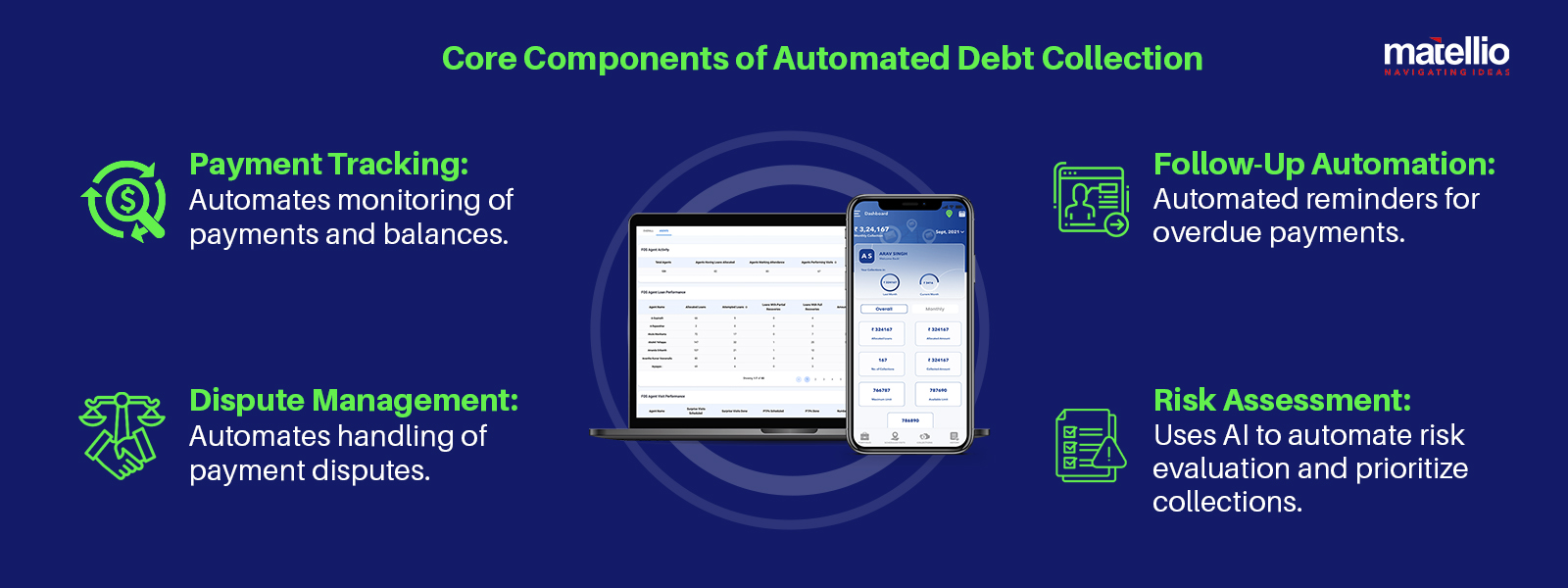
Automated debt collection leverages advanced technologies to transform traditional debt recovery methods. Unlike manual processes, automated systems use AI, machine learning, and robotic process automation (RPA) to manage communications, payment tracking, and follow-ups efficiently.
With automation, businesses can:
- Automatically send reminders and follow-ups via multiple communication channels.
- Track payments in real time and adjust strategies accordingly.
- Identify high-risk accounts through predictive analytics.
Automation enables seamless, end-to-end debt collection workflows, ensuring that businesses save time and resources while boosting recovery rates.
Why Should Businesses Invest in Automated Debt Collection Software?
Investing in automated debt collection software provides businesses with the tools they need to optimize their debt recovery efforts and achieve greater efficiency. In an increasingly competitive market, where maintaining cash flow and staying compliant with regulations is critical, automation offers a significant advantage. Below are key reasons why businesses should embrace automated debt collection solutions:
 Improved Efficiency
Automation takes over the repetitive, time-consuming tasks that typically burden collections teams, such as sending payment reminders and follow-up notifications. With automated debt collection, these processes are handled seamlessly, without manual intervention, significantly speeding up recovery times. Automated systems can track due dates, send reminders at the right time, and escalate accounts as needed, all while reducing human error. This allows businesses to collect payments faster and more effectively, improving overall operational efficiency.
 Higher Recovery Rates
One of the most compelling advantages of automation is the ability to use predictive analytics to enhance collection strategies. By analyzing debtor behaviors and identifying high-risk accounts, debt collection automation can customize communication strategies, follow-up schedules, and payment terms. This data-driven approach leads to more focused and personalized collection efforts, resulting in higher recovery rates. Businesses can proactively address delinquent accounts before they become serious issues, improving overall financial health.
 Cost Savings
Manual debt collection processes often require large teams to handle communications, payment tracking, and account management, which can be expensive. By automating repetitive tasks such as sending reminders, tracking payments, and updating account statuses, businesses can reduce the need for a large workforce dedicated to collections. This results in significant savings on staffing costs and other operational expenses. Additionally, debt collection automation software allows businesses to focus their human resources on more complex, value-added tasks that require strategic thinking and personal engagement.
 Compliance Assurance
Debt collection is heavily regulated, with stringent laws such as the Fair Debt Collection Practices Act (FDCPA) and the General Data Protection Regulation (GDPR) governing how businesses can communicate with debtors and manage their data. Failing to comply with these regulations can result in legal penalties, fines, and reputational damage. Automated debt collection software ensures compliance by embedding legal protocols into the system so all communications, data handling, and processes are aligned with the latest laws. Automated tracking also helps businesses maintain audit trails, ensuring they can demonstrate compliance when needed.
 Real-Time Data and Reporting
Automated debt collection systems offer real-time visibility into every stage of the debt recovery process. Businesses can track payment statuses, identify overdue accounts, and monitor recovery rates through intuitive dashboards. This real-time data enables companies to make informed decisions quickly and adjust their strategies as needed. For example, if certain accounts consistently fall behind, businesses can identify trends and implement preventive measures. Having access to accurate, up-to-the-minute information improves decision-making and ensures that automated debt collection efforts are as effective as possible.
 Enhanced Customer Experience
While debt collection can be a sensitive issue, automated systems allow for more personalized and professional communication with debtors. By automating the outreach process and using AI-driven insights to tailor communications to each debtor’s situation, businesses can create a more customer-friendly approach to collections. This reduces the friction associated with debt recovery, making it easier for customers to repay their debts without feeling overwhelmed or harassed. In turn, this helps preserve relationships, foster customer loyalty, and enhance the overall brand reputation as part of a broader digital transformation services.
 Scalability
As businesses grow, so does the volume of data and the number of accounts they need to manage. Manual debt collection systems can quickly become overwhelmed by this increased workload, leading to delays and inefficiencies. Automated debt collection solutions are designed to scale effortlessly with your business, allowing you to handle more accounts without adding additional resources. Whether you’re managing a few hundred or thousands of accounts, automation ensures that the collection process remains smooth and efficient, adapting to the growing demands of your business without compromising performance.

Features of a Strong Automated Debt Collection System
A robust automated debt collection system is built with essential features designed to maximize efficiency while incorporating next-gen technologies for a competitive advantage. These advanced tools, often developed by a Fintech software development company, provide the foundation for streamlined operations and enhanced debt recovery processes. Below is a table showcasing the core and advanced features of a modern debt collection system:
| Core Features | Next-Gen Features |
| Automated Payment Reminders | AI-Powered Predictive Analytics |
| Multi-Channel Communication | Machine Learning for Customer Segmentation |
| Payment Tracking and Reporting | Robotic Process Automation (RPA) for Workflow Automation |
| Customizable Communication Templates | Intelligent Chatbots for Customer Interactions |
| Compliance Management | Real-Time Data Analytics and Insights |
| Data Backup and Recovery | Natural Language Processing (NLP) for Dispute Resolution |
By incorporating both core and next-gen features, businesses can ensure that their debt collection processes are not only efficient but also future-ready.
Willing To Upgrade Your Automated Debt Collection Software with Exclusive Features?
Request A Quote Now!
Challenges in Automated Debt Collection and Their Solutions
While automated debt collection offers significant advantages, such as increased efficiency and accuracy, it also presents several challenges. To fully leverage the benefits, businesses must navigate potential hurdles and find effective solutions.
Complex Regulatory Compliance
Challenge:
Debt collection is subject to strict regulations, including the Fair Debt Collection Practices Act (FDCPA) and the General Data Protection Regulation (GDPR). Businesses must ensure their systems comply with these regulations to avoid legal repercussions.
Solution:
Automated debt collection software integrates compliance frameworks to ensure all communications and processes align with regulatory requirements. Real-time monitoring and auditing features help businesses quickly identify and rectify compliance issues, keeping their debt collection process legal and secure.
Data Security and Privacy Concerns
Challenge:
Handling sensitive debtor information comes with increased risks of cyberattacks, data breaches, and unauthorized access. Protecting personal financial data is essential to building trust and avoiding potential liabilities.
Solution:
Debt collection automation software incorporates multi-layered security, including encryption, access controls, and real-time threat monitoring. This ensures customer data is secure and compliant with relevant regulations like GDPR and CCPA. Regular audits and updates further enhance security.
Integration with Legacy Systems
Challenge:
Many businesses rely on legacy systems, making it challenging to integrate automated debt collection technology without causing disruptions. Compatibility between old and new systems can slow down recovery processes.
Solution:
Consultants develop integration strategies using cloud integration services, APIs, and middleware, enabling seamless communication between legacy systems and modern tools. This helps businesses bridge the gap between old infrastructure and new technology without significant disruptions.
High Implementation Costs
Challenge:
The initial costs of setting up an automated debt collection system can be high, particularly for small and medium-sized enterprises (SMEs). These costs often deter businesses from adopting automation solutions.
Solution:
Consultants help businesses implement cost-effective solutions by first automating critical areas such as payment tracking and reminders. Scalable solutions that can be gradually expanded over time are recommended, allowing businesses to align their investments with financial growth. Cloud-based debt collection automation solutions can further reduce infrastructure costs by eliminating the need for expensive hardware.
Cultural Resistance to Automation
Challenge:
Internal resistance to automation is common, as employees may fear that automation will disrupt established workflows or lead to job losses.
Solution:
Consultants implement change management strategies, including employee training and open communication about the benefits of automation. By demonstrating how debt collection automated systems can enhance productivity without replacing jobs, businesses can foster a more accepting workplace culture.
Managing Rapid Data Growth
Challenge:
As businesses grow, so does the volume of data they must manage, making it difficult to keep up with debt collection efforts without overwhelming the system.
Solution:
AI automated debt collection systems are designed to scale with business growth. Consultants implement cloud-based solutions and use machine learning algorithms to streamline data processing, ensuring that debt collections remain efficient even as data volumes increase.
Customer Experience Management
Challenge:
Debt collection is often viewed negatively by customers, and aggressive or poorly timed communication can damage relationships and harm a business’s reputation.
Solution:
Automated debt collection technology allows businesses to personalize communication and balance effective collection efforts with maintaining positive customer relationships. AI-driven insights help schedule reminders and follow-ups at optimal times, improving customer experience and protecting the company’s reputation.
Streamline Your Collections with Customized Debt Automation Software!
Request A Quote!
Steps to Develop Automated Debt Collection Software
Implementing automated debt collection software is a strategic approach to enhance recovery rates, cut operational costs, and streamline processes. Successful implementation follows a structured and well-executed plan to align automation tools with your business goals. Here’s a detailed breakdown of how to develop and deploy efficient debt collection automation:
 Assess Your Needs
Before beginning the automation process, it’s essential to thoroughly evaluate your current debt collection workflows. Identify repetitive tasks, such as payment tracking, follow-up notifications, and reporting, that would benefit from automation. A focused assessment helps pinpoint where automated debt collection will add the most value, improving efficiency and reducing manual interventions.
Our team brings deep expertise in understanding business needs. With extensive experience across diverse industries, we analyze your existing collection workflows, identify areas where automation will have the highest impact, and develop tailored solutions that address your specific challenges.
 Choose the Right Team
Selecting the right development team is critical to the success of your project. You need experts in Custom Enterprise Software Development who understand the complexities of debt collection and can design a solution tailored to your business, whether integrating AI to predict debtor behaviors or automating follow-ups. The right team ensures scalability and compliance with industry regulations, delivering software that meets your unique collection needs.
Our developers are seasoned professionals in building scalable, customized automation software. We specialize in creating debt collection solutions that seamlessly integrate with your existing systems while ensuring security and regulatory compliance. By leveraging the latest technologies, we build robust systems that grow with your business.
 Design Automation Workflows
After assembling the right team, the next step is to design detailed automation workflows. These workflows should clearly define the tasks, triggers, and conditions that activate debt collection automation processes, such as sending reminders, escalating accounts, and scheduling follow-ups. The workflows must align with your overall strategy and be flexible enough to accommodate business growth.
Our workflow design process is collaborative and strategic. We work closely with your stakeholders to understand the unique needs of your debt recovery process. Our team designs workflows that optimize each step, ensuring that automation enhances productivity without sacrificing the personalized approach your customers expect.
 Test and Optimize
Before fully deploying the system, start with a controlled pilot phase to test the automated debt collection workflows. This allows you to monitor how the automation functions on a smaller scale and identify any potential issues or inefficiencies. Optimizing at this stage ensures the full-scale implementation will deliver the desired results.
We believe in iterative testing to ensure everything runs smoothly before full deployment. Our team implements detailed pilot projects to measure the system’s performance, make necessary tweaks, and ensure that the solution meets the efficiency goals set by your business. This hands-on testing phase ensures a smooth transition to full implementation.
 Monitor and Adjust
Once the automated debt collection technology is deployed across your infrastructure, continuous monitoring is essential to ensure it performs optimally. Regularly track the performance of automated tasks, assess their efficiency, and adjust as needed. Over time, as regulations change or business needs evolve, your automation processes should adapt accordingly.
Our team provides ongoing support and monitoring after deployment to ensure your system operates seamlessly. We proactively track performance metrics, provide timely updates, and optimize the system as your business and compliance needs evolve. Our approach ensures that your automation processes stay ahead of regulatory changes and continue to deliver maximum value.
Optimize Your Debt Recovery with Our Automated Collection Solutions!
Fill out The Form!
Future Trends in Automated Debt Collection
As businesses increasingly prioritize efficiency and customer experience, automated debt collection is evolving to meet modern demands. By leveraging advanced technology, debt collection processes are becoming faster, more accurate, and more compliant. Below are the future trends shaping the automated debt collection landscape:
 AI and Machine Learning Integration
The integration of AI and machine learning into debt collection is transforming how businesses recover payments. AI integration services enable AI-driven tools to analyze debtor behavior, predict the likelihood of payment, and suggest tailored communication strategies. By automating processes such as follow-ups, dispute resolution, and risk assessments, businesses can significantly enhance collection rates while improving the debtor experience.
 Omni-Channel Communication
As customer preferences diversify, businesses must adopt omnichannel communication strategies to reach debtors through their preferred platforms—whether it’s email, SMS, social media, or phone. Automated debt collection systems will increasingly use AI to optimize communication strategies, ensuring that the right message is sent at the right time through the most effective channel. This approach improves engagement and accelerates payment recovery.
 Regulatory Compliance Automation
Debt collection is subject to strict regulations, and staying compliant with evolving laws like GDPR, FDCPA, and CCPA is crucial. Automated debt collection platforms will continue to integrate real-time compliance monitoring, ensuring that communications and practices are aligned with legal requirements. This will help businesses avoid fines, legal issues, and reputational damage while maintaining ethical and compliant practices.
 Cloud-Based Debt Collection Systems
Cloud-based platforms are becoming essential for businesses looking to scale their debt collection efforts efficiently. These platforms provide flexibility, real-time data access, and seamless updates. As more businesses move to the cloud, automated debt collection systems will integrate cloud-native solutions to enhance performance, scalability, and accessibility, making it easier for teams to manage large volumes of debt recovery operations from anywhere.
 Personalized Collection Strategies
With the rise of AI and data analytics, businesses can now tailor their debt collection efforts to each debtor’s profile. Automated systems can analyze payment histories, behaviors, and preferences to create personalized repayment plans and communications. This customer-centric approach not only boosts recovery rates but also fosters positive relationships between businesses and their customers, increasing the likelihood of future cooperation.
 Robotic Process Automation (RPA)
RPA is set to play a major role in automating repetitive tasks in debt collection, such as payment tracking, account updates, and documentation management. Robotic Process Automation services improve efficiency by reducing human errors, minimizing manual work, and enabling businesses to focus on more strategic activities. This trend will help companies streamline operations and increase overall productivity in their debt recovery processes.
Also Read: Top RPA Use Cases in Financial Services: Boosting Efficiency and Compliance
 Predictive Analytics for Better Decision-Making
Predictive analytics is becoming a key tool in debt collection. By analyzing historical data and debtor behavior, automated debt collection systems can forecast which accounts are most likely to default or which payment plans are most effective. This enables businesses to make proactive, data-driven decisions, improving recovery rates and optimizing resource allocation.
 Sustainability in Debt Collection
As sustainability becomes a priority for businesses, debt collection will also see a shift towards more eco-friendly practices. Digital-first, paperless solutions are replacing traditional, resource-heavy processes, reducing the environmental footprint of collections. Automated debt collection systems will help companies align their recovery efforts with broader sustainability goals by reducing the need for physical paperwork and enabling digital transactions.
How Can We Help You with Automated Debt Collection?
As businesses continue to grow, managing debt collection efficiently is crucial for maintaining healthy cash flow and customer relationships. Automating your debt collection processes with the right technology can significantly boost recovery rates, reduce manual workloads, and ensure compliance with regulations. Our technology consulting services can help streamline your debt collection efforts with tailored solutions.
Our team of experts specializes in delivering innovative, automated debt collection systems that integrate seamlessly with your existing infrastructure. By leveraging AI, machine learning, and automation, we ensure that your business can handle growing volumes of debt recovery efficiently while reducing operational costs. Whether you need assistance with building custom workflows or optimizing payment tracking, we have you covered.
Here’s how we can help your business succeed with automated debt collection:
- Customized Debt Collection Strategy: We work with your team to design automated debt collection systems that align with your specific business needs and compliance requirements.
- AI-Driven Insights: We incorporate AI and machine learning to analyze debtor behaviors and tailor communication strategies, enhancing collection rates and reducing time spent on manual tasks.
- Automation for Efficiency: We help automate repetitive processes, such as payment tracking and follow-ups, to free up your team’s resources for higher-value tasks, improving overall operational efficiency.
- Compliance and Security: Our consultants ensure that your automated debt collection processes meet all legal and security standards, minimizing risks and protecting your business from potential penalties.
If you want to explore how our automated debt collection solutions can enhance your operations, contact our team of experts today by filling out the form!
FAQ’s
[sp_easyaccordion id=”54098″]