
Executive Summary
Mobile commerce has reached $4.5 trillion globally [1], with retail mobile apps delivering 157% higher conversion rates than mobile websites [2]. Yet the true competitive advantage lies not simply in having an app, but in building intelligent experiences that transform occasional shoppers into devoted brand advocates.
This comprehensive guide explores how leading retailers are leveraging AI-powered personalization, gamified loyalty programs, strategic push notifications, and seamless omnichannel integration to drive measurable business results.
We will examine proven strategies for building retail mobile apps that enhance customer loyalty through personalized experiences, drive repeat business with engagement mechanics that actually work, and simplify multi-channel return handling to turn a traditional pain point into a competitive advantage. You will also witness a real world case study where in Matellio built an AI-powered platform for Cymbiotika.
Introduction:
The retail landscape has transformed dramatically. Customers no longer distinguish between digital and physical shopping; they expect one seamless, personalized experience that follows them everywhere. The stakes? According to McKinsey, top-performing loyalty programs generate revenue increases of 15% to 25% annually from customers who actively engage with them [3]. Yet half of all retail executives expect consumers to prioritize price over loyalty in 2024 [4].
This creates a critical inflection point: retailers who build mobile apps that truly understand and reward their customers will capture market share, while those offering generic experiences will watch customers slip away with just a few taps.
The question isn’t whether your retail brand needs a mobile app; it’s whether your app can transform occasional shoppers into devoted brand advocates while solving real operational challenges like multi-channel returns. Let’s explore how the most successful retail apps are rewriting the rules of customer loyalty.
The Mobile Commerce Revolution: Why Retail Apps Outperform Everything Else
Mobile commerce reached nearly $4.5 trillion globally in 2024, accounting for 70% of total retail e-commerce sales . But the real story lies beneath these numbers: mobile apps deliver 157% higher conversion rates than mobile websites .
Why are there such dramatic differences? Mobile apps offer something mobile websites simply cannot: a direct, persistent connection to customers through push notifications, personalized experiences, and frictionless checkout. When Starbucks integrated its mobile payments with its loyalty program, it drove 32% growth in active mobile users, with at least 30% of U.S. transactions now occurring through the app [5]. McDonald’s mobile-based loyalty program reached 175 million members, driving approximately $30 billion in sales in 2024 .
These aren’t just impressive numbers; they represent a fundamental shift in how retailers build relationships with customers. The app becomes the primary touchpoint, the loyalty program becomes the incentive, and personalization becomes the differentiator.
Beyond Points and Discounts: What Modern Retail Loyalty Apps Actually Need
The loyalty program landscape has evolved far beyond simple point of accumulation. Deloitte’s research reveals that 73% of consumers prioritize personalized rewards, yet only 60% feel satisfied with current personalization efforts . This gap represents a massive opportunity for retailers willing to invest in truly intelligent mobile experiences.
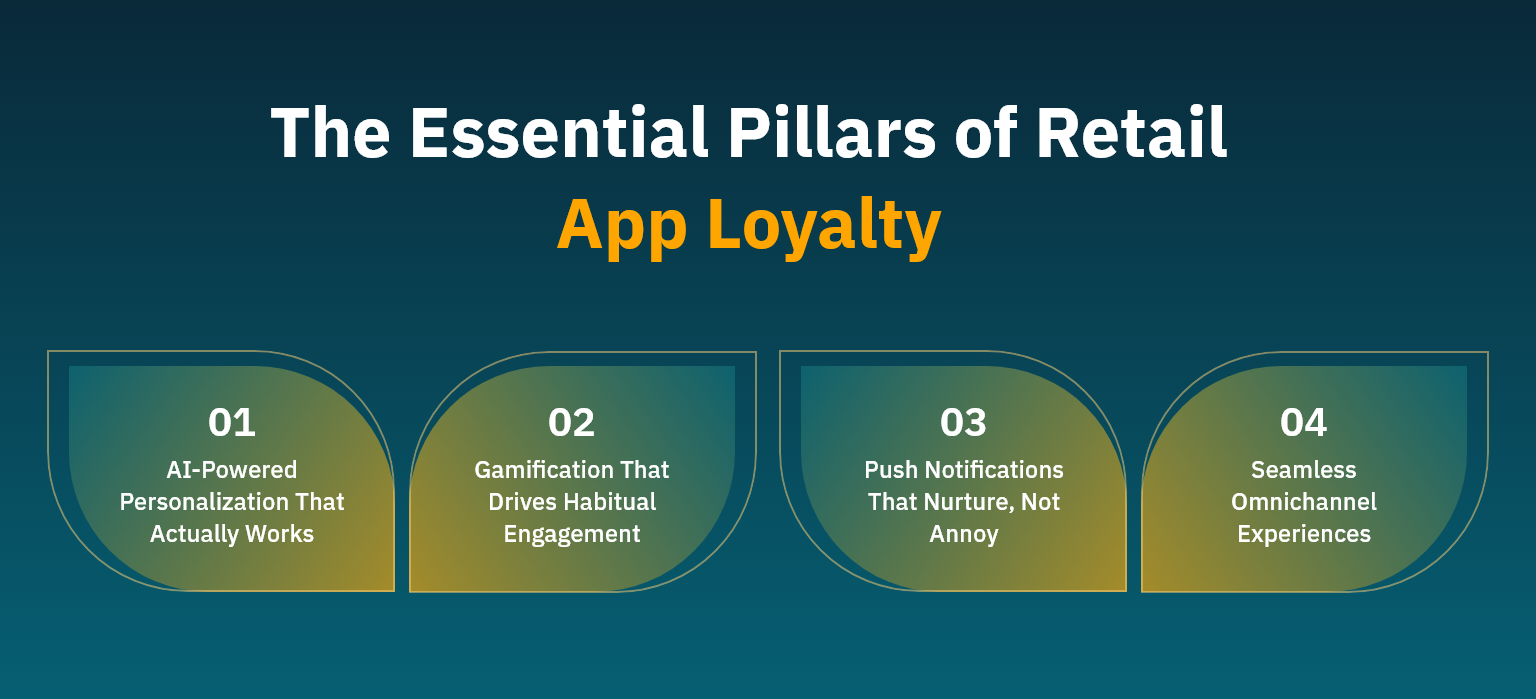
The Essential Pillars of Retail App Loyalty
1. AI-Powered Personalization That Actually Works
Generic product recommendations are dead. Today’s customers expect retailers to understand their preferences, anticipate their needs, and surprise them with relevant suggestions. According to McKinsey, companies that excel at personalization generate 40% more revenue than their slower-moving counterparts [6].
Real-World Transformation: How Cymbiotika Revolutionized Customer Personalization
The challenge facing many retailers today mirrors what Cymbiotika, a visionary health and wellness brand, experienced with their digital customer engagement. Despite offering premium, science-backed wellness solutions to health-conscious consumers worldwide, Cymbiotika found themselves constrained by a static, rule-based product recommendation system.
The Problem: Their existing approach relied on simple quiz responses that offered predefined product suggestions lacking adaptability. Without AI-driven insights, recommendations remained generic and failed to align with individual customer needs. This limitation prevented the brand from delivering the tailored experiences modern customers demand, hindering their ability to build trust and foster meaningful customer connections.
The Transformation: Cymbiotika partnered with Matellio to transcend these limitations by implementing an advanced AI-powered recommendation system. The solution harnessed cutting-edge technologies:
- Machine Learning Algorithms that analyzed diverse customer data streams
- Natural Language Processing (NLP) to understand customer intent and preferences
- Advanced Analytics Frameworks that processed quiz responses, purchase history, browsing behavior, and engagement patterns
- Real-Time Adaptation ensuring recommendations evolved with each customer interaction
The Implementation: Rather than relying on rigid if-then rules, the new system created a holistic view of each customer. When a customer browsed products, the AI didn’t just look at what they clicked, it analyzed:
- Historical purchase patterns and product affinities
- Quiz responses indicating health goals and preferences
- Browsing behavior showing interest areas
- Time spent on different product categories
- Seasonal patterns and replenishment cycles
- Similar customer profiles and their successful purchases
The Impact: The results validated the power of AI-driven personalization:
- Elevated Relevance of product recommendations through data-driven matching
- Transformed Customer Engagement via tailored experiences that resonated individually
- Enhanced Customer Loyalty driven by personalized interactions that felt genuinely helpful
- Empowered Scalability to adapt to evolving customer needs and market conditions
Most importantly, recommendations that once felt generic now resonated with individual preferences, driving deeper engagement and lasting loyalty.
Applying Cymbiotika’s Lessons to Retail Mobile Apps
This same transformation applies directly to retail loyalty apps across industries. Imagine a fashion retailer whose app doesn’t just recommend products based on past purchases, but understands:
- Style DNA: Analyzing colors, cuts, patterns, and brands a customer gravitates toward
- Seasonal Preferences: Understanding when customers shop for different occasions
- Size Intelligence: Learning fit preferences to reduce returns
- Budget Patterns: Recognizing price sensitivity and sale responsiveness
- Cross-Category Affinity: Suggesting accessories that complement clothing purchases
- Lifecycle Stage: Adapting recommendations as customer needs evolve
The difference between rule-based and AI-powered personalization is profound. A rule-based system might say “customers who bought this also bought that.” An AI-powered system understands that a customer who browsed winter coats in August is planning ahead for seasonal needs, someone who frequently returns items needs different size recommendations, and a loyal customer whose patterns suddenly change might be shopping for gifts rather than themselves.
This level of personalization transforms transactions into relationships, the foundation of true customer loyalty that drives repeat business and long-term value.
2. Gamification That Drives Habitual Engagement
The gamification market captured 27.93% of total market share in retail in 2024, with good reason . According to research, brands see a 47% increase in engagement and a 22% rise in loyalty when incorporating gaming elements effectively [7].
But successful gamification goes far beyond badges and points. The best retail apps create multi-layered reward systems that appeal to different motivational drivers:
- Achievement-based rewards for frequent shoppers who love reaching milestones
- Social challenges that let customers compete with friends or community members
- Surprise bonuses that create moments of delight and encourage app opens
- Tiered status levels that make customers feel valued as they progress
Platforms using gamified elements experience a 35% increase in engagement compared to non-gamified counterparts [8]. The key is designing game mechanics that feel natural to the shopping experience rather than forced additions.
3. Push Notifications That Nurture, Not Annoy
Push notifications remain one of the most powerful tools for customer retention, but only when used strategically. App users who receive one or more push notifications in their first 90 days have one-third higher retention rates than those who don’t [9]. Yet the average U.S. smartphone user receives 46 push notifications daily which creates fierce competition for attention .
The brands winning this battle understand that personalization and timing are everything. According to research, companies can increase customer retention rates by 25% to 95% with just a 5% improvement in retention efforts [10]. Strategic push notifications play a crucial role:
- Abandoned cart reminders (with an average cart abandonment rate of 70.19%, recovery notifications are essential )
- Back-in-stock alerts for products customers expressed interest in
- Personalized offers triggered by browsing behavior or purchase history
- Loyalty reward expirations that re-engage customers at risk of churning
- Location-based notifications when customers are near store locations
McKinsey reports that brands growing faster drive 40% more revenue from personalization, including personalized push notification strategies . The secret is relevance: every notification should add value to the customer’s life, not just drive immediate sales.
4. Seamless Omnichannel Experiences
Boston Consulting Group’s 2025 Personalization Index Report emphasizes that “shoppers want curated, seamless journeys across digital and physical touchpoints” [11]. Consumers no longer see digital and physical as separate worlds; they expect a connected experience where every touchpoint reinforces the other.
Companies with strong omnichannel customer engagement strategies retain 89% of their customers, compared to just 33% for companies with weak omnichannel strategies [12]. Moreover, omnichannel customers show a 30% higher lifetime value than single-channel customers .
For retail mobile apps, this means:
- Buy online, pick up in-store (BOPIS) functionality with real-time inventory visibility
- In-app access to order history from all channels
- Unified shopping carts that sync across web, mobile, and in-store experiences
- Store mode features that enhance the physical shopping experience
- Consistent pricing and promotions across all touchpoints
The most successful retailers are creating what Boston Consulting Group calls “touchpoint-centric engagement” focusing on optimizing every individual interaction rather than thinking in terms of separate channels .
Solving the Multi-Channel Returns Challenge
Returns represent one of retail’s most complex operational challenges, yet they’re also one of the most critical customer experience touchpoints. Research shows that 92% of consumers will buy again if the return process is easy [13], making returns handling a competitive advantage rather than just a cost center.
How Mobile Apps Simplify Returns Across Channels
Real-Time Return Initiation: Customers can initiate returns directly through the app, selecting the return method that works best for them:
- Ship from home with pre-paid labels
- Drop off at nearby retail locations
- Schedule home pickup for large items
- Exchange in-store for different sizes or colors
Smart Return Recommendations: AI-powered systems can suggest alternatives before completing the return:
- Different sizes or colors that might work better
- Similar products based on the reason for return
- Store credit bonuses that encourage exchanges rather than returns
Transparent Return Tracking: Just as customers expect order tracking, they want return visibility:
- Real-time status updates as returns are processed
- Automatic refund notifications
- Digital receipts for in-store returns
- Historical return records for warranty or exchange purposes
Flexible Return Policies by Customer Tier: Loyalty program members can enjoy enhanced return privileges:
- Extended return windows for top-tier members
- Free return shipping regardless of order size
- Express refund processing
- Try-before-you-buy options for loyal customers
By integrating returns management into your mobile app, you transform a traditionally frustrating experience into a seamless process that actually strengthens customer loyalty.
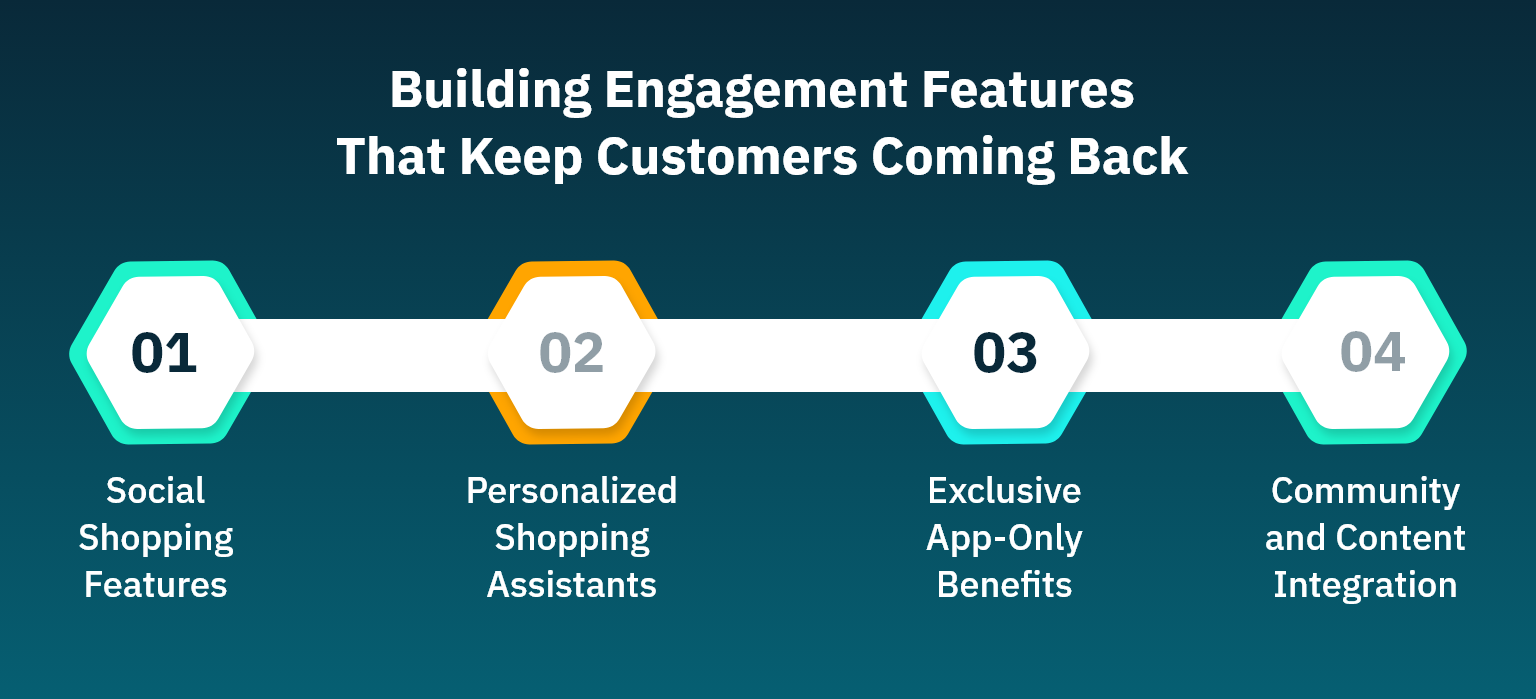
Building Engagement Features That Keep Customers Coming Back
Mobile apps with high retention rates share several common characteristics that go beyond basic shopping functionality:
Social Shopping Features
- Share favorite products with friends
- Create and share wish lists
- See what’s trending in your network
- Refer friends for mutual rewards
Personalized Shopping Assistants
- Virtual stylists that learn preferences over time
- Size recommendation engines that reduce returns
- Outfit builders that suggest complete looks
- Personal shopping notifications for new arrivals in favorite categories
Exclusive App-Only Benefits
- Early access to sales for app users
- Special promotions unavailable on other channels
- Surprise rewards for app engagement
- Birthday and anniversary perks
Community and Content Integration
- Style guides and how-to content
- User-generated content featuring products
- Live shopping events through the app
- Product reviews and Q&A sections
Research shows that when customers feel valued, 97% are likely to share positive word of mouth, and 86% increase their spending [14]. These engagement features create those feelings of value that translate directly to business results.
Technical Foundations: What Makes Retail Apps Actually Work
Behind every successful retail loyalty app is a robust technical architecture that delivers speed, security, and scalability:
Cloud-Native Architecture
Cloud-based solutions provide the flexibility to scale during peak shopping periods without overinvesting infrastructure. They also enable:
- Real-time inventory synchronization across channels
- Faster feature deployment and testing
- Global performance optimization
- Cost-effective scalability
API-First Integration
Modern retail apps must integrate with multiple systems:
- Point-of-sale systems for in-store purchases
- E-commerce platforms for online orders
- CRM systems for customer data
- Marketing automation platforms
- Payment processors and digital wallets
- Third-party logistics for shipping and returns
An API-first approach ensures these integrations remain flexible and maintainable as your tech stack evolves.
Advanced Analytics and Customer Data Platforms
Understanding customer behavior requires sophisticated data infrastructure:
- Predictive modeling for churn prevention
- Customer segmentation engines
- A/B testing capabilities
- Attribution modeling across touchpoints
Security and Compliance
With 62% of customers happy to share data in return for personalized loyalty experiences , protecting that data is non-negotiable:
- End-to-end encryption for all transactions
- Compliance with GDPR, CCPA, and other regulations
- Secure payment processing (PCI DSS compliance)
- Biometric authentication options
- Transparent data usage policies
The App Store Optimization Strategy
Building a great app is only half the battle; customers need to discover it. App store optimization for retail apps requires a strategic approach:
Discovery Optimization
- Keyword-rich titles and descriptions
- High-quality screenshots showcasing key features
- Promotional videos that tell your brand story
- Category optimization for better visibility
Conversion Optimization
- Clear value proposition in the first screenshot
- Social proof through ratings and reviews
- Feature highlights that address customer pain points
- Limited-time download incentives
Retention Optimization
- Onboarding experiences that demonstrate value quickly
- Push notification opt-in strategies that respect user preferences
- Regular feature updates that improve app store ranking
- Response strategies for negative reviews
According to research, apps that send onboarding messages earn 24% higher install-to-purchase conversion rates [15], making that first user experience absolutely critical.
How Matellio Can Help
Creating a retail mobile app that drives genuine loyalty requires more than just technical expertise; it demands a strategic partner who understands retail dynamics, customer psychology, and the transformative power of intelligent technology.
Why Matellio Stands Apart in Retail App Development
1. Proven AI-Powered Personalization Expertise
Our work with Cymbiotika demonstrates our ability to transform static systems into dynamic, intelligent experiences. We moved their recommendation engine from rule-based limitations to AI-powered personalization that analyzes purchase history, browsing behavior, and engagement patterns to deliver recommendations that truly resonate.
This same expertise applies to retail loyalty apps. Whether you’re building from scratch or modernizing an existing solution, our AI and machine learning capabilities enable personalization that drives real business results, not just generic product suggestions.
2. Comprehensive Retail Technology Solutions
Matellio’s mobile app development services span the complete spectrum of retail needs:
- Native iOS and Android Development for optimal performance and user experience
- Cross-Platform Solutions that maintain consistency across devices
- Progressive Web Apps that bridge the gap between web and mobile
- IoT Integration for connected retail experiences
- Cloud Architecture that scales seamlessly during peak shopping periods
Our retail software development approach focuses on creating seamless omnichannel experiences. We understand that your mobile app isn’t an isolated solution; it’s part of a broader retail ecosystem that includes point-of-sale systems, inventory management, CRM platforms, and e-commerce websites.
3. End-to-End Implementation Support
We don’t just build apps and disappear. Our engagement includes:
- Strategic Consulting to define your app’s competitive positioning and feature roadmap
- UX/UI Design that balances beautiful interfaces with conversion-focused functionality
- Agile Development with regular milestones and transparent progress tracking
- Quality Assurance across devices, operating systems, and usage scenarios
- App Store Optimization to maximize discovery and downloads
- Post-Launch Support including feature updates, performance monitoring, and continuous improvement
4. Advanced Technical Capabilities
Our retail app solutions leverage cutting-edge technologies:
- Machine Learning for predictive analytics, churn prevention, and smart recommendations
- Natural Language Processing for voice search, chatbot integration, and sentiment analysis
- Computer Vision for visual search, AR try-on experiences, and image-based product discovery
- Real-Time Analytics for understanding customer behavior and optimizing engagement
- Secure Payment Processing with support for digital wallets, stored payment methods, and emerging payment technologies
- API-First Architecture that enables seamless integration with your existing systems
5. Flexible Engagement Models
We offer engagement options that align with your budget and timeline, dedicated development teams for large-scale projects, fixed-price contracts for well-defined scope, time, and material for evolving requirements, and staff augmentation to expand your existing team’s capabilities.
6. Transparent Communication
Every project includes a dedicated project manager who serves as your single point of contact. We provide regular progress updates, transparent pricing, and clear documentation throughout the engagement
7. We measure success by business outcomes, not just technical deliverables
Customer Acquisition Cost (CAC) and payback period, Customer Lifetime Value (CLV) improvement, app store ratings and reviews, user retention rates at 7, 30, and 90 days, session duration and frequency, conversion rates for key actions, revenue per user, and Net Promoter Score (NPS) for customer satisfaction.
Conclusion: The Future Belongs to Experience-First Retailers
The retail mobile app revolution isn’t coming; it’s already here. The question is whether your brand will lead or follow.
According to Gartner, 80% of online shoppers now prioritize experiences over products when choosing where to shop . This fundamental shift elevates mobile apps from a nice-to-have feature to a must-have competitive weapon. The most successful retail apps don’t just facilitate transactions; they create experiences that customers actively choose over competitors.
They turn shopping from a chore into a delight, returns from a hassle into a breeze, and occasional customers into devoted brand advocates. With McKinsey data showing that top loyalty programs drive 15-25% annual revenue increases , and omnichannel customers delivering 30% higher lifetime value, the business case for investment is clear.
The brands waiting to see how things develop aren’t playing it safe; they’re falling behind competitors who understand that mobile apps represent the future of retail customer relationships. Retailers who invest in robust app experiences today are building stronger customer relationships through personalized engagement, richer data pipelines for better decision-making, more resilient revenue streams less dependent on discounting, and higher customer lifetime values through improved retention.
Building this kind of transformative mobile experience requires more than development skills—it demands strategic vision, technical excellence, and deep understanding of retail dynamics. Whether you’re launching your first retail app or reimagining an existing one, the right partner makes all the difference.
The future of retail belongs to brands that meet customers where they are: on their phones, in their moments, with experiences that feel designed just for them. Let’s build that future together.
Key Takeaways
- Mobile apps deliver dramatically higher performance: 157% higher conversion rates than mobile websites
- Personalization drives revenue growth: McKinsey reports that companies excelling at personalization generate 40% more revenue than slower-moving counterparts
- Loyalty programs deliver measurable ROI: Top programs generate 15-25% annual revenue increases from actively engaged customers
- Gamification significantly boosts engagement: Brands see 47% increase in engagement and 22% rise in loyalty when incorporating effective gaming elements
- Omnichannel customers are more valuable: They show 30% higher lifetime value than single-channel customers, with retention rates of 89% vs. 33%
- Push notifications drive retention when strategic: Apps sending relevant notifications in first 90 days see one-third higher retention rates
- AI transforms recommendations into relationships: Static rule-based systems limit growth; intelligent personalization analyzes behavior patterns to deliver relevant experiences
- Returns management is a loyalty opportunity: 92% of consumers will buy again if the return process is easy, making it a competitive advantage
- Technical foundations matter: Cloud-native architecture, API-first integration, and robust security enable scalability and seamless omnichannel experiences
- App fatigue is real: Success requires offering genuine value beyond mobile websites – exclusive benefits, personalized experiences, and simplified shopping
FAQ’s
The most common complaints include lack of personalization, generic rewards that don’t match customer preferences, complicated point redemption processes, and apps that feel disconnected from in-store experiences. Many customers also express frustration with excessive push notifications that aren’t relevant to their interests.
Mobile loyalty apps serve as direct communication channels between retailers and customers, enabling personalized customer service, proactive problem-solving, and self-service options. They improve the shopping experience by providing product information, personalized recommendations, easy checkout, order tracking, and simplified returns—all in one place.
App fatigue is real—customers resist downloading apps that don’t offer significant value beyond what’s available on a mobile website. The key barriers are storage space concerns, privacy worries, notification overload, and skepticism about whether the loyalty benefits justify another app download. Success requires offering genuine value that customers can’t get elsewhere.
The most successful apps combine AI-powered personalization, gamified rewards, seamless omnichannel integration, strategic push notifications, exclusive benefits, social features, simplified returns, and excellent user experience. They also maintain transparent data practices and provide real-time value through features like inventory checking and in-store navigation.
Custom-built loyalty apps offer complete control over customer data, brand experience, and feature development. They enable deeper integration with existing systems, unique differentiation from competitors, and long-term cost savings. While third-party platforms provide faster deployment, custom solutions deliver better ROI for established retailers with specific requirements and substantial customer bases.
Effective personalization uses AI to analyze purchase history, browsing behavior, and preferences to offer targeted rewards. Gamification works best when it includes multiple engagement mechanics—points, badges, challenges, leaderboards, surprise bonuses, and tiered status levels. The key is making both feel natural to the shopping experience while appealing to different customer motivations.
Mobile apps streamline returns by allowing customers to initiate returns anywhere, choose their preferred return method (ship, in-store drop-off, pickup), track return status in real-time, and receive instant refund notifications. Smart apps also suggest alternatives before completing returns and offer enhanced return privileges for loyalty members.
The highest-performing strategies include personalized onboarding experiences, strategic push notifications that add value, gamified loyalty programs, exclusive app-only benefits, social features, regular content updates, and seamless omnichannel functionality. Apps that send relevant notifications in the first 90 days see one-third higher retention rates.
Research shows that 63% of U.S. consumers are willing to share personal information in exchange for loyalty benefits, and 22% are happy to share data for personalized experiences[4]. However, trust is essential—customers expect transparency about data usage, strong security measures, and tangible value in return for their information.
The biggest mistakes include launching with insufficient features, poor user experience design, ineffective onboarding, too many or irrelevant push notifications, lack of integration with in-store experiences, complicated reward redemption, ignoring customer feedback, inadequate marketing of the app’s benefits, and failing to evolve the app based on user behavior data.
References:
- eMarketer – “Global Retail Mobile Commerce Report 2024” – Mobile commerce reaching $4.5 trillion globally, 70% of total retail e-commerce
- Ecommerce Mobile Statistics 2025: Growth & Conversion Data – Sales So – Mobile Apps have 157% higher conversion rates than mobile website
- McKinsey & Company – “Customer Experience & Loyalty” – Top loyalty programs generate 15-25% annual revenue increases
- Deloitte – “The Annual Report on Consumer Loyalty Expectations and Preferences 2024” – 73% prioritize personalized rewards, 60% satisfaction with personalization, 63% willing to share data for benefits, 22% happy to share data for personalization
- Advertising Week – “The Untapped App Economy: How Brands Can Capture Growth Beyond the Web” – Starbucks 32% growth in active mobile users, McDonald’s 175M loyalty members driving $30B in sales
- McKinsey – “Mobile Commerce and Personalization Study” – Companies excelling at personalization generate 40% more revenue, brands growing faster drive 40% more revenue from personalization
- Mordor Intelligence – “Gamification Market Size & Share Analysis” – Retail captured 27.93% gamification market share in 2024, 47% engagement increase and 22% loyalty rise with gaming elements
- Forrester Research – “Gamification in E-commerce” – Platforms using gamified elements see 35% engagement increase, 80% of shoppers prioritize experiences over products (Gartner)
- Business of Apps – “Push Notifications Statistics 2025” – Apps sending push notifications in first 90 days see 1/3 higher retention, average US user receives 46 push notifications daily
- GetResponse – “Your Ultimate Guide to Mobile Push Notifications in 2025” – 5% retention improvement increases profits 25-95%, 70.19% average cart abandonment rate
- Boston Consulting Group – “The Next Generation of Omnichannel Retail” – BCG 2025 Personalization Index Report on curated seamless journeys, touchpoint-centric engagement
- Renascence – “Key Customer Experience Statistics You Need to Know in 2025” – 89% retention with strong omnichannel vs 33% weak omnichannel, 30% higher lifetime value for omnichannel customers
- Shopify – “Omnichannel vs. Multichannel Marketing: Key Differences” – 92% of consumers will buy again if return process is easy
- Gartner – “Customer Loyalty and Engagement Research” – 97% share positive word of mouth when valued, 86% increase spending when feeling valued
- OneSignal – “Mobile App Benchmarks of 2024” – Apps with onboarding messages earn 24% higher install-to-purchase conversion rates